
Spoken English Fluency and Articulation: Practical Daily Exercises for Students
How students can break through language hesitation and speak English fluently and confidently. Explore the shadowing technique, daily reading aloud, and building active expressive vocabulary.
Published on November 19, 2026
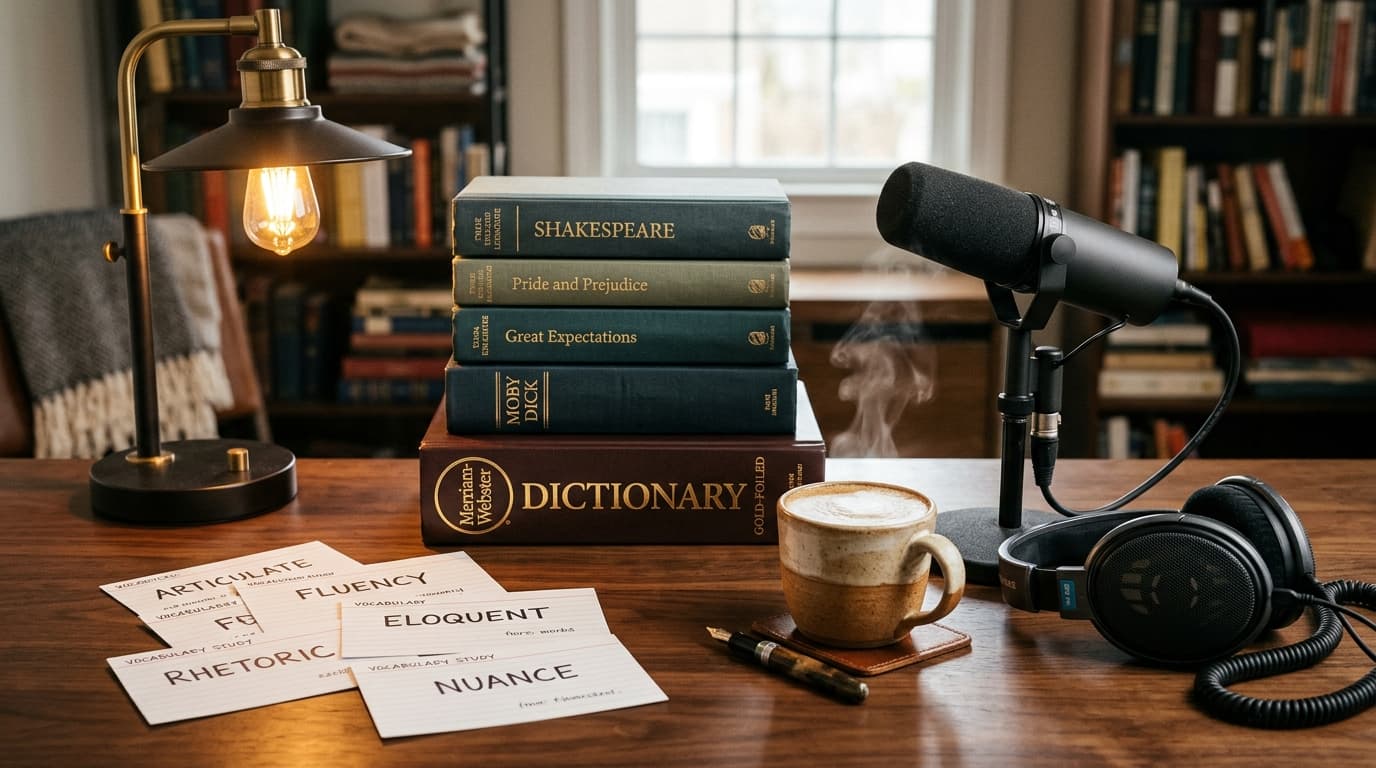
Across India, millions of students can read and write English with high proficiency, scoring top marks on school grammar and literature examinations. Yet when called upon to speak in a debate, deliver a class presentation, or participate in an interview, they find themselves freezing with hesitation.
The root of this challenge is simple: reading and writing are passive, reflective skills; speaking is a real-time motor skill.
When you write, you have seconds to pause, recall vocabulary, and revise syntax. When you speak, your brain must synchronize conceptual thought, lexical retrieval, grammar construction, and physical vocal cord articulation within milliseconds.
Overcoming spoken hesitation does not require memorizing thick dictionary pages; it requires physical daily vocal training.
3 Transformative Daily Exercises for Spoken Fluency
1. The Speech Shadowing Technique
Shadowing is a speech-training method developed by linguists to train pronunciation, rhythm, and natural cadence:
- Choose an audio recording of a clear, articulate speaker (e.g., a high-quality educational documentary, podcast, or classic speech).
- Listen to a sentence, pause the audio, and immediately repeat it aloud, mimicking the speaker's exact rhythm, pitch, pauses, and inflection.
- Gradually transition to speaking along with the audio with just a half-second delay.
- 10 minutes of daily shadowing trains your tongue and vocal cords to produce English sounds naturally without mental translation.
2. The 15-Minute Expressive Reading Aloud Protocol
Most students read silently. Silent reading exercises internal visual cognition, but leaves physical articulation dormant:
- Select an editorial article, classic novel, or well-written biography.
- Read one page aloud every day with deliberate, theatrical expression: stressing key verbs, modulating volume, and pausing at punctuation.
- Hearing your own voice produce fluent English creates positive auditory feedback, dismantling internal performance anxiety.
3. The 2-Minute Extempore Journaling Drill
- Every evening, select a random everyday object or topic (e.g., My favorite meal, Why trains are fascinating, or What I learned in Science today).
- Start a 2-minute timer on your watch.
- Speak continuously about that topic without stopping, switching languages, or pausing for more than three seconds.
- Do not worry about occasional grammatical slips. The objective is to train your brain to prioritize communicative momentum over perfectionism.
Expanding Active vs. Passive Vocabulary
Many students possess a large "passive vocabulary" (words they understand when reading), but a small "active vocabulary" (words they naturally use when speaking).
To transfer words from passive to active storage: whenever you learn a new word, immediately formulate three distinct spoken sentences using that word in contexts relevant to your everyday life.
Key Takeaway
Academic excellence is built upon deliberate practice, conceptual mastery, and disciplined time management. Consistent preparation paired with guidance from verified tutors helps turn potential into top results.
Academic contributor to the Teacher Near Me Knowledge Feed, helping students, educators, and parents navigate Indian curriculum, competitive exams, and high-performance learning strategies.
Read Next
More from Knowledge Feed

Active Recall & Spaced Repetition: The Cognitive Science of Scoring 95%+ Without Burnout
Why passive rereading is an illusion of competence. Explore the Ebbinghaus forgetting curve, the testing effect, and how to build a spaced repetition study schedule for maximum exam retention.

The Feynman Technique: How Explaining Concepts in Simple Words Accelerates Retention
Discover the four-step learning model created by Nobel Prize physicist Richard Feynman. Learn how teaching a concept in plain language exposes knowledge gaps and cements deep mastery.

Why Private 1-on-1 Tutoring Accelerates Learning: Bloom's 2 Sigma Problem Explained
Explore educational psychologist Benjamin Bloom's landmark 1984 research showing how 1-on-1 personalized tutoring elevates student performance by two full standard deviations over classroom teaching.